
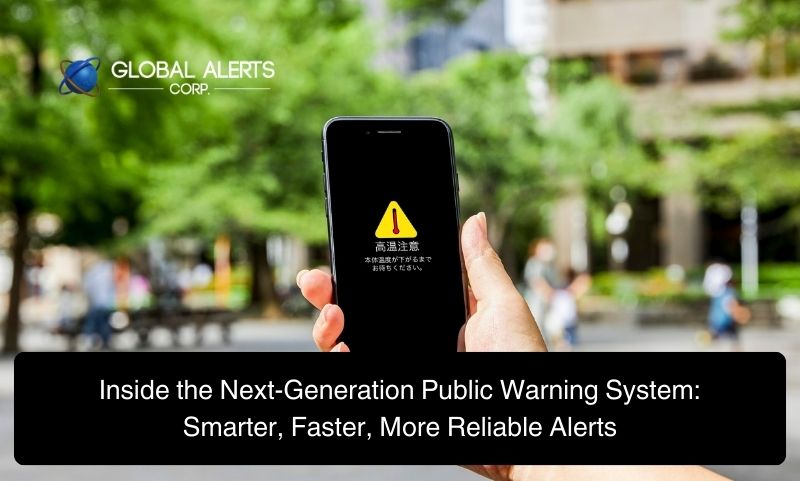
Emergencies can strike at any moment — earthquakes, floods, storms, pandemics, industrial accidents, civil threats, and more. In this fast-changing world, the value of reliable, timely, and precise public alerts has never been more critical. Traditional warning systems were revolutionary for their time, but they no longer match the speed or scale of today’s challenges. Communities now need alerts that are faster, smarter, more targeted, and more dependable.
This is exactly where the Next-Generation Public Warning System steps in — an advanced framework designed to transform how nations communicate during crises. With a focus on intelligence, automation, accuracy, and global reach, it brings public safety into a new era.
Why We Need a Next-Generation Approach
The number of disasters worldwide is rising due to climate change, rapid urbanization, technological complexities, and increasing mobility across borders. More people are exposed to risks than ever before, making traditional alert systems insufficient.
Older systems often struggle with:
- Delayed delivery
- Network congestion
- Poor geo-targeting
- Human error
- Inconsistent messaging
- Limited interoperability with global authorities
In contrast, the Next-Generation Public Warning System is designed to bypass these limitations and deliver alerts with unprecedented speed and reliability.
What Makes a Public Warning System “Next-Generation”?
A next-generation system isn’t just an upgraded version of older frameworks — it’s a complete reinvention built around modern technology. Below are the defining characteristics:
1. Ultra-Reliable Delivery
Instead of depending on traditional SMS or data networks, next-generation systems often use cell broadcast, a technology that pushes alerts directly to mobile devices even when networks are overloaded. This ensures that messages reach people instantly, regardless of traffic or signal issues.
2. High-Speed Communication
Every second matters during emergencies. The new systems deliver messages in seconds, allowing citizens more time to act. Speed can be the difference between evacuation and entrapment, or life and death.
3. Smart Automation
One of the greatest advantages of advanced public warning systems is automation. They integrate with global and national data sources — weather agencies, health organizations, security bodies, police, and emergency departments — and use AI-driven logic to process information in real time. This reduces human error and speeds up decision-making.
4. Accurate Geo-Targeting
Instead of sending alerts to an entire region or nation, next-gen systems allow for precise geo-fencing. Only people in the affected area receive the alert. This enhances relevance and prevents unnecessary panic among unaffected populations.
5. Global Interoperability
In today’s interconnected world, emergencies don’t stop at borders. Travellers, migrants, and citizens abroad need to stay informed. A Next-Generation Public Warning System supports cross-border alerting, ensuring safety messages follow individuals wherever they are.
6. Secure, Authentic, and Trusted
Next-generation systems use authenticated protocols like the Common Alerting Protocol (CAP). This prevents unauthorized alerts, false warnings, and system interference, helping maintain public trust.
7. Scalable and Sustainable
Modern public warning frameworks are built to scale for entire nations without heavy funding requirements. The technology is adaptable, allowing low-income and high-income countries alike to deploy effective emergency alerting.
How the Next-Generation Public Warning System Works
To appreciate the power of this advanced system, it helps to understand how it functions behind the scenes.
Step 1: Data Collection From Trusted Sources
The system pulls information from multiple validated authorities:
- Meteorological agencies
- Disaster management centers
- Law enforcement
- Health and disease monitoring organizations
- Humanitarian bodies
- Security agencies
This ensures alerts are based on accurate, real-time insights.
Step 2: AI-Driven Assessment
Artificial intelligence scans incoming data for patterns, threats, and anomalies. It evaluates:
- Severity
- Geographical spread
- Potential escalation
- Required response
Automation drastically reduces the time between threat detection and alert issuance.
Step 3: Alert Generation and Authentication
The system generates a standard, structured message using CAP. The message is authenticated, ensuring:
- It’s from a verified authority
- It cannot be tampered with
- It is safe for public consumption
Step 4: Instant Distribution Through Cell Broadcast
Once validated, the alert is broadcast directly to devices in the specified area. Unlike SMS, cell broadcast:
- Is not affected by network congestion
- Works even when mobile data is unavailable
- Reaches all compatible mobile devices automatically
Step 5: Citizen Action
Alerts may instruct citizens to:
- Evacuate
- Seek shelter
- Avoid specific areas
- Follow public health instructions
- Report missing individuals
- Prepare for extreme weather
The clarity and speed of these instructions enhance safety and minimize casualties.
Real-World Benefits of the Next-Generation Public Warning System
1. Saves Lives
Timely alerts can prevent injury and death during:
- Floods
- Earthquakes
- Tsunamis
- Hurricanes
- Wildfires
- Terror attacks
- Industrial accidents
- Pandemics
The more quickly people receive warnings, the greater their chances of avoiding harm.
2. Reduces Chaos and Panic
Precise geo-targeting ensures only impacted communities receive alerts — keeping the rest of the population calm.
3. Supports Emergency Services
When people know what to do and where to go, emergency teams can operate more efficiently without overwhelming crowds or misinformation.
4. Works During Network Failures
Cell broadcast remains functional even when:
- Calls aren’t going through
- The internet is down
- SMS is delayed
- Networks are jammed
This reliability makes it the preferred method during major disasters.
5. Provides Global Coverage
The system can warn both residents and visitors, offering protection to:
- Tourists
- Foreign workers
- Students
- Business travellers
- Migrants
In an increasingly globalized world, this inclusivity is vital.
6. Prevents “False Alerts” and Unauthorized Messages
The secure message authentication prevents situations where false alarms are sent accidentally or maliciously. This ensures public trust remains strong.
Challenges in Traditional Warning Systems and How Next-Gen Solves Them
1. Network Congestion
Old Problem: SMS and mobile data collapse during emergencies.
New Solution: Cell broadcast bypasses congestion entirely.
2. Slow Processing
Old Problem: Human operators take time to verify and send alerts.
New Solution: AI automates large parts of the workflow.
3. Poor Relevance
Old Problem: Alerts are often sent to entire regions unnecessarily.
New Solution: Geo-fencing ensures accuracy.
4. High Costs
Old Problem: Legacy systems are expensive to maintain at national scale.
New Solution: Modern systems use sustainable models that reduce financial burden.
5. Limited International Cooperation
Old Problem: Systems don’t work across borders.
New Solution: Next-gen frameworks support global interoperability.
How This System Strengthens a Nation’s Emergency Strategy
A Next-Generation Public Warning System doesn’t operate in isolation. It becomes a central layer within a nation’s comprehensive emergency response plan.
1. Enhances Early Warning for All
Ensures every citizen — regardless of their location or economic background — is protected during emergencies.
2. Builds Public Confidence
A reliable, consistent alert system creates trust in government and emergency services.
3. Supports National Goals
Many nations aim to modernize disaster preparedness frameworks. This system supports:
- Smart city infrastructure
- Citizen safety initiatives
- Technological modernization agendas
4. Reduces Economic Loss
Faster, more accurate alerts reduce damages to:
- Infrastructure
- Homes
- Businesses
- Public services
5. Improves Coordination Across Agencies
Governments, telecom operators, and first responders can communicate more effectively.
Looking Ahead: The Future of Public Warning Systems
The evolution of public warning technology is far from over. Future systems may include:
- Multichannel alerting across digital platforms
- Two-way communication, allowing citizens to report back
- Deeper AI integration for predictive analytics
- Advanced map-based alerting
- Integration with smart home devices, wearables, and IoT sensors
- Enhanced accessibility tools for people with disabilities
The ultimate goal is simple: Early Warning for Everyone, Everywhere.
Why Citizens Should Care
You may think emergency alert systems only matter during major disasters. But in reality, they protect you every day.
The Next-Generation Public Warning System gives you:
- Faster alerts when danger approaches
- Accurate, location-specific instructions
- Reliable delivery even when networks fail
- Peace of mind when traveling
- Authentic, trustworthy information
It ensures you never miss a message that could save your life or protect your loved ones.
Conclusion
The world is changing, and so are the risks we face. The Next-Generation Public Warning System represents a major leap forward in how nations safeguard their people. With its advanced automation, global interoperability, cell broadcast technology, secure messaging protocols, and intelligent alerting capabilities, it provides the speed, reliability, and precision that modern emergencies demand.
As countries continue to upgrade their public safety frameworks, next-generation warning systems will play a central role in creating resilient, informed, and protected communities. In moments of crisis, a single alert — delivered at the right time — can change everything. This is more than technology; it’s a life-saving commitment to public safety.